
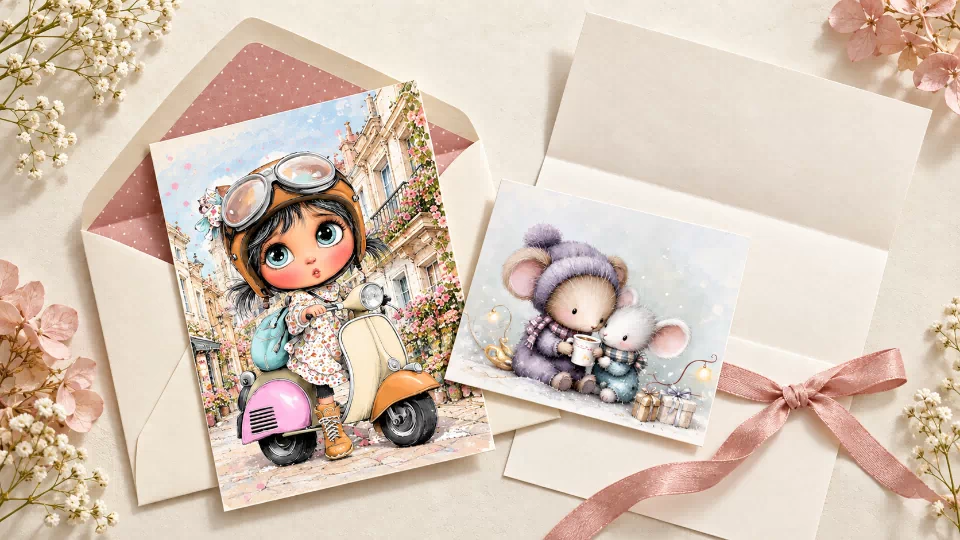
A letter gives you space to slow down and say something that might be lost in a quick message. Adding an illustrated detail can make opening it feel special, whether you are writing a thank-you, catching up with a friend, or sending a little encouragement.
“Happy mail” can be as simple as a friendly note with something small tucked inside. You do not need a box of matching supplies. Begin with the person, choose a picture that reminds you of them, and let that connection guide the rest.
Write around a shared memory
Choose an illustration that brings a moment to mind. A city scene might recall a weekend together; a woodland animal could remind you of a walk or a favourite story.
Use the memory as your first sentence. “This picture made me think of the café we found” gives the artwork a reason to be there and makes beginning the letter easier.
The City Explorer pages could give a travel-themed letter a playful starting point. The scene does not need to match a real location: explain the connection in your own words.
Give the writing room to breathe
A detailed paper can look lovely, but a plain area helps the message stay readable. Consider placing the illustration on a separate small card or using a quiet edge of the design beside the words.
One image and one repeated colour are enough to tie the pieces together. If your chosen page has a busy scene, use a smaller detail elsewhere instead of repeating the whole picture on everything.
Tuck in something with a small purpose
A bookmark, a favourite recipe written on a card, or a little picture can become a keepsake after the letter is read. Choose something the recipient might enjoy using.
For a friend who reads, add a line about a book you think they would like. For someone who enjoys cooking, share a recipe and the story of when you last made it. A useful enclosure feels personal when it carries that bit of context.
Keep the envelope’s thickness and your postal service’s size rules in mind if you add several pieces. A single flat enclosure is an easy place to begin.
Let the season provide a mood
Seasonal mail can celebrate the feeling of a time of year without needing a long holiday message. You might write about the first chilly morning, a favourite winter ritual, or something you are looking forward to.
Soft snowy artwork from the woodland winter collection could suit a gentle winter hello. An antique-style Christmas scene could accompany a note about a family tradition.
End with an invitation to reply
Give your friend something easy to answer. Ask what they are reading, which little outing they have enjoyed lately, or what they would choose for a quiet afternoon.
You could leave a small plain space on an illustrated card for their answer, or simply ask the question at the end of the letter. Keep it light; the invitation should feel like continuing a conversation.
The picture can make the envelope a pleasure to open, but the words give it meaning. Choose one person you would enjoy writing to, one detail that reminds you of them, and a few things you have wanted to say.